If you wear an estrogen patch, you probably know the moment. You step out of the shower, glance down, and a corner has curled up. Or worse, the patch is gone, and you’re checking the drain and the bath mat.
I hear about this from patients all the time, and right now it matters more than ever. Estradiol patches have been hard to find across the US, with pharmacies backordered and people switching brands just to fill a prescription. When every box is precious, losing a patch early isn’t just annoying. It can mean a gap in your dose.
The good news: most peeling comes down to a handful of causes, and nearly all of them are fixable.
Why patches come loose
1. Something is on your skin
Body lotion, oil, sunscreen, even the residue from a moisturizing body wash leaves a thin film that adhesive can’t grip. This is the most common cause I see, and the easiest to fix.
2. Your skin is still damp or warm
Putting a patch on right after a hot shower feels efficient, but warm skin keeps releasing moisture for several minutes, and that moisture gets trapped under the edges.
3. Friction from your clothes
A patch on your lower belly that sits right where your waistband, leggings or seatbelt rubs gets lifted a little every time you move. Over a few days, the edges give up.
4. Water, sweat and heat
Patches are made to handle a shower. But long baths, swimming, hot yoga and humid summer days all soften the adhesive at the edges, which is where peeling always starts.
5. The edges collect lint
The sticky rim of a bare patch picks up fibers from your clothes. That’s the gray outline you see when you take it off, and once lint builds up, the edge doesn’t stick as well.
What actually helps
- Start with plain, dry skin. Wash the spot with plain soap and water, rinse well, and let it dry completely. Skip lotion on that area.
- Wait after showering. Give your skin 10 to 15 minutes to cool and dry before you put a new patch on.
- Pick a spot clothes don’t rub. Below the waistband on your lower abdomen, or on your upper buttock, are usually good choices. Always follow the site instructions for your brand, and never put it on your breasts.
- Press for a full 10 seconds. Use the flat of your palm, then run a fingertip around every edge. Warmth from your hand helps the adhesive bond.
- Rotate sites. Move to a new spot each time so your skin stays healthy. Irritated skin doesn’t hold a patch as well.
- Pat dry, don’t rub. After a shower or swim, pat the area gently with a towel instead of scrubbing over the patch.
If your patch does fall off: most estradiol patch instructions say to press the same patch back on if it will still stick, or apply a new one, and then keep your usual change day. Check the leaflet in your box, and call your pharmacist if you’re unsure.
What about tape?
Medical tape on the corners is the classic fix, and it’s what most of my patients try first. The trouble is that tape only covers part of the edge, it peels on its own, and the adhesive on the tape picks up even more lint. You end up with more gray residue, not less.
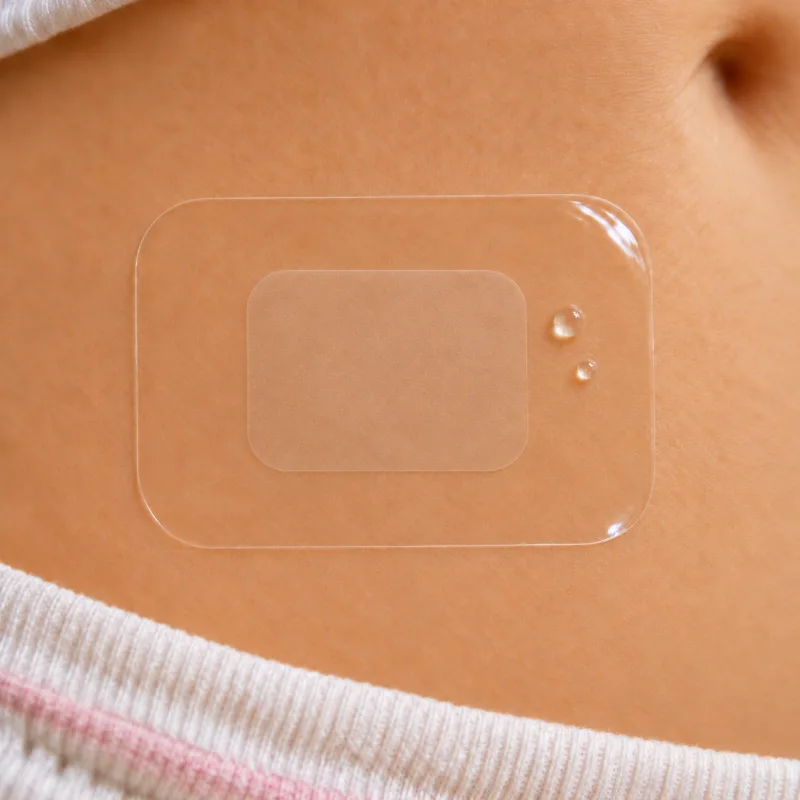
A better option is a thin, clear film cover that goes over the whole patch and seals every edge at once. It keeps water and lint out, and you can still see your patch underneath. Before you cover any prescription patch, check with your prescriber or pharmacist, since every patient and every patch is a little different.
Getting rid of the gray ring
If you already have that outline, rub a little baby oil or an oil-based adhesive remover into it, let it sit for a minute, and wipe it away. Then wash the area with soap and water. Just don’t use oil on the spot where your next patch is going.
When to talk to your doctor
Call your clinician if your patch keeps falling off despite all of this, if your skin is red, itchy or blistering under it, or if you notice your symptoms coming back between changes. Sometimes switching to a different brand or size makes all the difference, and with today’s shortage, your pharmacist may already be helping you find alternatives.